
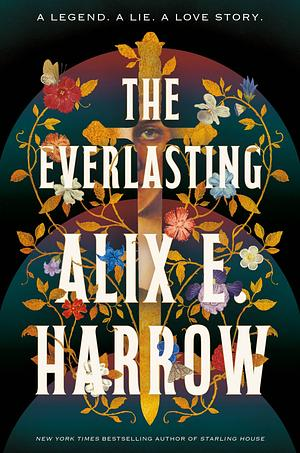
Earlier this year I read The Second Death of Locke, and proclaimed it the best book I had read all year. In this, the final month of the year of Lady Knights, I must now inform everyone reading this, that Locke has been usurped. The Everlasting is the best book I have read all year.
Another reviewer online said this was ‘romantasy so good they’ll call it literary fiction’, I am sorry I didn’t get your name, because you are absolutely correct. The Everlasting deals with big themes, colonialism, war, love, ambition, the right a woman has to lead or start or benefit from those things; gender, queerness, the total eradication of fear and bravery and personhood in the face of unconditional love; power, submission, politics, and yes, sex; time, myth, legend, the power of a name and a story and a tragedy. Harrow quotes Shakespeare in this, at least once, which is fitting, because her writing and her themes are Bard-ian in their universality and impact.
The Everlasting is the kind of novel which reminds you what stories can be. It is readable, and yet experimental, fresh, but never self-conscious in its rejection of convention. Harrow doesn’t throw out the rule book, she consumes it, she uses it as an intertext to her rule-breaking. The Everlasting is, in my mind, exactly that, a book which should stand the test of time, a novel unlike any other, one worthy of a place on the snottiest shelves, as much as it is deserving of a place in the hands of casual readers, fantasy lovers, and romance fiends.
To discuss the events of this novel would be to spoil the experience of it. Instead I will tell you this: The Everlasting is a love story and a tragedy. It is historical, and it is sci-fi, and it is myth. The Everlasting is consuming, lyrical, intoxicating, ruinous. You should read it.
5 stars.


Leave a Reply