
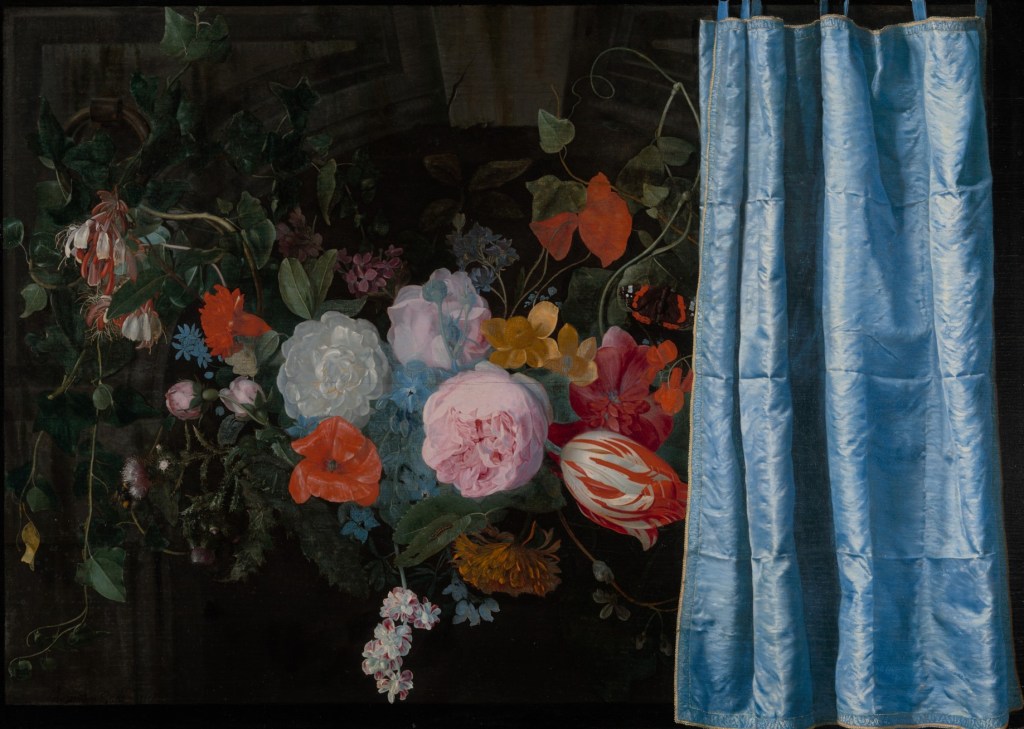
Close reading is a phrase used to describe the way we read things in English. Not English the language, but English the subject. Close reading is not simply casting your eyes over something, it is not even taking the time to read every word [although that is sometimes part of it], close reading is, rather, the act of taking in what you are reading, breaking it down into its composite parts, and trying to understand it.
Lots of people who take Arts and Humanities subjects, particularly at degree level or beyond, suffer under the idea that they must be ‘bad’ or certainly worse at STEM subjects. For the most part, in my experience as an Arts and Humanities student, and as someone who knew a lot of them, that isn’t true. Close reading, for example, is an activity that requires lateral thinking, and a systematic approach to information gathering. It also requires a solid basing in knowledge – you can’t identify techniques you don’t know about. It is as close as English gets to engineering; the ‘taking it apart to see how it works’ urge played out on writing rather than unsuspecting kitchen appliances.
When learning how to close read, poetry is often a good starting place. Poems are shorter, looking at them holistically is easier, and picking up patterns made more simple by being able to see the whole work on one page. Lots of people will learn how to close read, even if that’s not what their teachers are calling it, at school. Plenty of people will never really pick up the skill – those tend to be the same people who quote the age old ‘the curtains are blue’ bollocks.
Actually, whilst I’m on the topic, that’s an excellent starting point. In the oft quoted meme [if you can even really call it that], the speaker mocks their English teacher’s insistence that the proverbial curtains are blue because of some character or narrative related reason, and instead insists that curtains might just be blue. In doing so, the speaker shows a fundamental lack of understanding. Your English teacher isn’t stupid. If they want to know why the curtains are blue, chances are good there’s a point to be made about them being blue. But we’ll get on to that later. For now the question is, why? Why can’t the curtains just be ‘fucking blue’? To answer that question we need more context.
Close reading is not possible with a single sentence, not usually at least. You can absolutely close read a sentence, break it down into its parts, but you might not learn that much about a whole work. If you took, for example, a single line in Emily Henry’s Book Lovers out of context, you might assume the book as a whole is a tragedy. So let’s put our blue curtains in context, let’s imagine that the blue curtains hang in the bedroom of a widower. We’ll call him Mark. Mark is a workaholic, he has devoted himself, after the death of his wife, to his work, his children, and his misery. He has recently fallen in love again, but cannot allow himself the joy of love, without also opening himself up to the possibility of loss. Mark is, in a word, sad.
Now, from this context alone, we could begin to understand how the curtains might be a symbol. They hang in his bedroom, a place where he once slept beside his late, beloved wife. They are, literally, a tool with which Mark can keep things out, the light of the sun for example. They are something that he, as the person whose room it is, can control. Thus by themselves, regardless of colour, the curtains may be a symbol of Mark’s sadness. We add the colour into this because colour, like any number of other things, can take on a symbolic quality in creative works. After all, is it not common enough to call feeling sad, ‘feeling blue’? The connection between blue and sadness is well founded, so much so that detailing it here would just be a waste of time.
Let’s have some more context. If, after an argument with his would-be new love, we’ll call her Jane, Mark storms to his room, and viciously draws the blue curtains, leaving the space illuminated only by the blue glow of his work laptop – a glow echoed by the faint blue cast around the window, as the rich sun shines through the blue curtains – we begin to appreciate even more how the curtains, and the blueness of them, might be symbolic in the narrative. Now the curtains, and the laptop, are echoing each other. They are both tools of separation. Mark’s work, and the physical barriers he uses to close himself off, are both shrouded with blue. Blue might, in such a work, have other important occurrences. It might be the colour of eyes, either Jane’s, or his late wife’s. Blue might be a colour we see people wear, or dye their hair, it might be the colour of a room, food, or car. It might only occur around the laptop and the curtains, and be notable for that reason.
This is an example I have developed around the notion of important blue curtains. As such, in this example, the curtains existing, and their being blue, are both separately and jointly important. Both characteristics are notable enough to talk about in an essay, seminar, or book report. If your English teacher is bringing something up, then it would be really very unlikely that the characteristic, colour, object, motif, or interaction they are asking you to comment on is not comment worthy.
Is it possible that the author did not intend to put that detail in a book? Sure. Does it matter? No. In school we approach things, most typically, through the lens of authorial intention because it is 1) the most commonly done thing in contemporary English tuition at a Secondary level [not historically the case btw] and 2) it is the easiest for teenagers, who may not continue their English tuition, to understand. That doesn’t mean that every detail you might pick out during a close read was intentionally left in there by an author. In fact many authors, most infamously Ian McEwan, have commented on the over-analysis of their work by English teachers, citing that certain details were just thrown in there. Good for them. To quote an essay on Death of the Author theory I read, once upon a time, and have never been able to find again,’just because it comes from the horses mouth, doesn’t mean the horse knows what it’s talking about.’1 In other words, just because an author didn’t consciously leave a detail in something, doesn’t mean that detail doesn’t impact on the reading of a book. If you noticed it, then it impacted on your reading.
So, this is where I circle back like I promised. Could the curtains just ‘be fucking blue’? Maybe. But you can usually tell if that is the case from the context of the passage. In a poem, rather than a book, a detail like that takes up space, in a form that is typically quite contained. So adding it in probably means something, even if all it means is ‘blue fits the rhyme scheme.’ In a play, where such details about setting are unusual, the specificity of blue curtains pretty much has to mean something. In a novel, where I suspect most people would expect to find this detail, the way the curtains, and their blueness, is introduced will likely tell us if they’re an important detail. For example, if we learn that the curtains are blue in a paragraph of description about Mark’s bedroom, and they seem to broadly match the decor, are never referenced again anywhere in the book, and the colour blue is never really brought up again either, they probably don’t matter that much. There isn’t much, or any, discernible intention behind telling us the curtains are blue. Alternatively, if the blue curtains are repeatedly referenced, if they are introduced to us in an intense scene where adding in the colour jars a little, or if blue is a repeated motif throughout the novel, then THE CURTAINS BEING BLUE IS PROBABLY IMPORTANT!
Now we’ve got that out of the way. How and why.
How is pretty easy. You need some knowledge, basic things will serve you well here. Simile, metaphor, alliteration, onomatopoeia, sibilance , rhyme scheme, repetition, motif, oxymoron, imagery, assonance, juxtaposition, personification, anthropomorphism, hyperbole, irony, sentence length – I could genuinely go on for pages. If you have ever heard it in an English lesson, read it in a book report, or scoffed at it in an analysis, then it is something you can pull out in a close reading. The mechanics of close reading are pretty simple:
Step 1 : Read the thing. To close read you do not have to read it more than once, but a read through usually helps.
Step 2 : Read it again, but this time focus not on the story, or even the words, but the techniques / devices employed. Identify these.
Step 3 : Having identified these devices, and ideally highlighted them / annotated them / noted them consider what the devices bring to the work. Is there a pattern? Does the author prefer metaphor to simile? Do they use alliteration, but avoid sibilance? Does this tell you anything? Remember, the author and the speaker are not the same person, talk about both, but do not conflate them.
Step 4 : Use that information for whatever you need it for; personal knowledge, essay writing, finally making your up-himself smarty-pants frenemy look dumb at a dinner party – fill your boots!
Why is a little harder. In English lessons at school you’ll learn how to do this because it is part of the curriculum, ultimately, but more than that because these skills, whether you appreciate them or not, are pretty important to daily life. If you can look at something, and take things away from it, break it down into its elements, and figure out why it works or doesn’t work, you will be a more effective communicator, and a more comprehensive reader. Both of these are core transferable skills, and they are also pretty necessary for navigating a post fake-news world.
To round this all out I thought we’d do a couple together! No seriously. I briefly tutored GCSE students in English, so I have a teensy bit of experience on the support and explain front, and I have an MA in English, so a lot of experience on the close reading front. For ease, I have chosen poems, and for view-ability, I have decided to separate these out into other posts! Please click the buttons below to see these.
- Death of the Author theory was posited in an essay by Roland Barthes, a notable literary critic and theorist, in 1967. In the simplest terms, Death of the Author theory suggests that the purest way of analysing literature is not to take into account the author at all, but focus exclusively on the work in front of you. In a Death of the Author reading you would entirely eliminate [metaphorically kill off] the author, the author’s intentions, and the context of the author’s life. You would effectively look at the book / poem / play / whatever in a vacuum. This is very simplistic, summary of the theory, if you want to know more, I would encourage more thorough research than reading this footnote! ↩︎
 Let's Talk Books
Leave a comment