


I read a lot. I have read, a lot, since I was a child. My dad used to read to me, when I was very small, and then I learned, and from that moment onwards I have read almost as voraciously as him. Our house is full of books, more so than anything else. It is a habit my father the English teacher passed on to me, eldest daughter and ex-English student. A habit none of my siblings picked up. More’s the pity.
When you read so widely it becomes difficult to pin point which books have the most effect. I might read something that changed someone else’s life, and it’ll be the 8th book I read that month, and hardly make a dent. Equally, I might read something I love, that means nothing to anyone else. But when I saw this prompt I thought, ‘hey, there’s gotta be 3 that really mattered, right?’ Let’s talk books.
![Cover image of The Raven Boys by Maggie Steifvater. A painted raven cover most of a grey bacground. The bird is rendered in swirling brush strokes, in shades of black, navy, and deep teal. At it's heart a flash of red and burgundy, as though the bird's beating heart can be viewed through its feathers. In the bottom right corner, over a rounded triangle of interesting lines, the title of the book [The Raven Boys] is written in a black sans serif font. The author's name [Maggie Steifvater] is written in large, red, serif font at the top of the book.](https://eebonnerauthor.co.uk/wp-content/uploads/2024/06/image-3.png?w=678)
The first book I want to mention is The Raven Boys by Maggie Stiefvater. I’ve been a fan of Stiefvater since I first read Shiver at 12. When I picked up The Raven Boys I thought it sounded fun. I thought, incorrectly, that it would be just one more book about magic and teenagers I would read, in a life filled with books about magic and teenagers. How wrong I was. The Raven Boys, and the whole of the series which I then read as they came out, threw me for a loop. Stiefvater had done something quite astounding, she had packaged nostalgia. She had concentrated the feeling of limnality and teenage-dom – the pain, and depression, and anxiety, and joy, and love, and wildness of it – into 300-odd pages. This was the first book I ever read that made my life feel pale in comparison, and at the same time, that made me feel joyous at simply getting to exist as a person, and as a teenager. The whole of The Raven Cycle has stayed with me, each of them examining another aspect of life, another element of magic, family, friendship, or loss. It’s a series I would recommend to anyone, because it is such an equal mix of beautiful writing and consuming story, and because when someone writes characters as excellent as these, everyone should get to meet them.
The next book, isn’t a book at all. I considered a lot of things to come in here at number two. Lost Children Archive by Valeria Luiselli. Home Fire by Kamila Shamsie. Rebecca by Daphne Du Maurier. Gone Girl by Gillian Flynn [which i talk about far too often on this blog.] My Beautiful Laundrette by Hanif Kureishi, which I read as a screenplay. Queendom Come by Ellen Galford. I even considered Shakespeare. I landed instead on something not a book, not even a play, not even, in fact, in English. The second work, rather than book, that made an impact on me is Wulf and Eadwacer. It’s a poem, well, to be clear, it’s a fragment of a poem. I first encountered it during an undergrad module called ‘Viking Myths and Sagas’ which was easily as exciting, if not more so, than it sounds. Or at least it was if you’re my brand of nerd. This was the first time something in Old English [although admittedly I read it in translation] really got me. After that module I specialised in Medievalism. I took as many modules in Old English and translation as I could get away with, I even chose all Medieval modules for my Masters. Those ended up falling through (long story, summary is, we should better fund the arts) and if all had gone to plan I might be writing this blog post from a pokey office, or PhD student library lounge. As it stands, I’m writing it from my work computer at lunch time, working comfortably in the archive / information sector.
I digress.
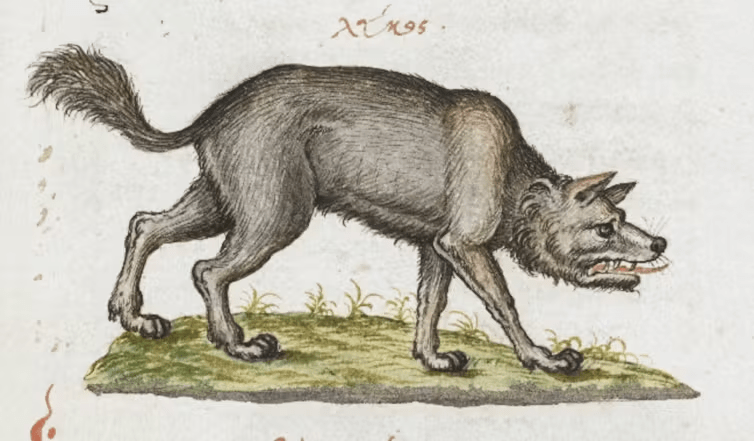
Wulf and Eadwacer made a huge impact on me. It was exciting. It was new, and unusual. It was a fragment, a part of a story. It was also, uniquely, un-interpret-able. A mix of gendered terms, pronouns, metaphors, allusions and sentences decontextualised from a wider story. I remember a lecturer introducing gender as a theme, mentioning the difficulty in interpreting it in this fragment, and then encouraging us not to get too carried away. Old English is complex, and our understanding was limited at best. This poem spoke to me, and I became absorbed in Medieval English, in Old English, in Viking myths and sagas. I read this poem, and I altered the course of my education entirely. I read this poem, and ran rampant with ideas. I didn’t end up doing much with any of them, I left academia after my MA, and as yet have had no desire to go back. I am out of practice with essays, and Old English translation, and I doubt any journal would publish me anyway. But always Wulf and Eadwacer remains, just a part of a story – but one that has never left me.1
![Cover image of Leading Man by Justin Myers. On a yellow background, standing beneath a spotlight, is a man. He is tall, and lanky, with thick, curling dark hair. He is white, with a slightly ruddy complexion, and wears brown-grey shoes, green trousers, a white shirt, a red tartan scarf, and an orangey-camel coloured coat. In one hand he holds a leather, flap-front briefcase, and in the other he holds a lilac book. Above the man, in a clear, bold sans serif font the title of the book [Leading Man] is written in bubblegum pink. Beneath the man, at the bottom of the page, the author's name [Justin Myers] is written in a red handwriting font.](https://eebonnerauthor.co.uk/wp-content/uploads/2024/06/image-5.png?w=441)
The last book I want to talk about is one I read this year. I suppose this is cheating, even more so than including a Medieval poem is cheating because really it has not had much time to impact me at all. Still, I find, it has. Leading Man by Justin Myers is a book I read in February of this year. It is not, despite the marketing, a romcom. It is, in fact, a coming of age story with a difference. Leo, main character of Myers latest Queer-led contemporary fiction novel, is in his 30s. He is moderately successful, in the sense that he has a job, some friends, a place to live, and a relationship with some members of his family. And he is moderately happy, in the sense that he has some friends. And he is quite miserable, in the sense that his friends never really listen to him, his family isn’t great, his ex is the worst person in the world (and for some reason won’t stop visiting Leo’s mum,) and even though he just started going out with his dream guy, he can’t help feeling like maybe things aren’t actually getting any better. Different isn’t necessarily better. This is a novel with a lot to offer the reader. It is a meditation on trauma, healing, and growth. It is an anecdotal example of what ‘coming to terms’ and ‘setting boundaries’ is meant to look like. It is a love letter to adults who do not know how to be the main characters of their own lives, and at the same time so desperately want to be loved as well and fully as they love others. It is raw, and honest, frustrating and empowering. It is somehow reflective, and at once focused on the future. I loved it, much more, and much more fully, than I thought I would. It is a book that will stay with me for a long time, I know that.
So there we have it. 3 books. I could go on, I could find parts of almost everything I’ve ever read that resonates with me. I could tell you that both The Ministry of Time and When Among Crows were so good, I might have to buy hardbacks just so I can have a copy of them forever. I could tell you that C.K. McDonnell’s Stranger Times series is one of the funniest I’ve ever read, and it is a humour that I think about whenever I sit down to write something new. I could talk about books forever.
But then when would I find time to read?
 Let's Talk Books
Leave a comment