

In the world of stories romance, sex, and sex & romance play a big part. They are common denominators, things that equalise – they are emotions we all recognise, tropes we find familiar, cliches that are reliable, without becoming old hat. They are things that, as writers, we should attempt to write well. Or at least attempt to write, at all. They are also things that have considerably more, or less, importance depending on your target audience, the genre you’re writing in, and your own comfort level. From the length of this post, I’m sure you can tell I’ve been spending a lot of time thinking about all of this. So just one question remains… to bae or not to bae?
I’m big on the homework, the background. I’m the child of teachers, and I work in the information sector, so knowledge for knowledge’s sake is pretty big for me. Let’s start with a bit of that.
Young Adult, and its cousin New Adult, were not, or perhaps are not, designations awarded by publishers. That distinction is one made by booksellers. There is a rumour (one that circulates in Contemporary Literature circles as much as it does book industry ones,) that Twilight is the reason – a book that felt neither adult fiction, nor children’s, but which would require its own designation, its own place to be shelved. Without doing more research than a blog post I’m writing on my lunch-break strictly calls for, I can’t substantiate that. What I can say, as someone who spends an awful lot of time in a publisher’s library, is that some books do not have an obvious place where they belong.
Homework point number two is a couple of interrelated points about romance fiction. The first is that genre fiction, is, and will likely remain, the backbone of the book industry. Popular fiction is more widely selling, more widely read, and frankly more accessible that it’s frenemies Literary fiction and Poetry. Romance is just one of those genres, sure, but is by far the highest grossing one. Debut authors in romance vastly outsell their counterparts in other areas, and novels that straddle romance and other genres, like the emerging Romantasy for example, perform better than non-romantic counterparts. The second part of this point is that, that isn’t new. The novel form, as it presently exists, owes plenty to romance fiction. If Fantomina hadn’t had a racy romp at the rakish playhouse, or Pamela hadn’t been wooed by her aggressive employer, or indeed if any number of French author’s hadn’t wowed and scandalised their up-tight British neighbours with tales of debauchery and sex, then we might not have the novel. It was the popularity of these books, especially with women, that resulted in the commercial success of the novel. It was that commercial success that convinced poets, and moreover men, that the novel was worth their time. It was that popularity that allowed for a move away from the strictly epistolary into prose fiction as we know and love it today.
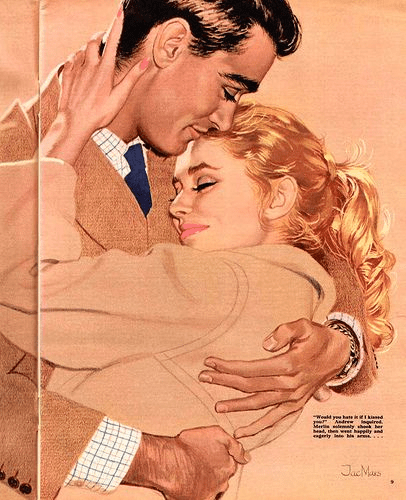
All of that is to say that romance, plots or subplots aside, is important (it sells, for one thing,) but it is also polarising. I’d like to think we’ve all moved beyond the highbrow / lowbrow debate, that grown-up readers are capable of saying ‘that’s not for me’ rather than ‘that book is inherently bad’ but as recent TikTok discourse re: ‘spice’ tells us, that simply is not the case. So, I am left at a bit of an impasse, as a writer at least.
On the one hand, I read and enjoy romance books. Those with and without sex scenes, those with detailed, racy, nigh on erotica scenes; and those with vague-ish closed-door-but-like-maybe-the-draft-excluder-got-caught kinda scenes; and those that are full closed-door-Meryl-Streep’s-diary-says-DotDotDot kinda scenes. I like them all. I like the ease of romance novels, and the reliability of their narratives. I enjoy how low stakes they tend to be, and how even the high stakes ones never feel truly stressful. My love for romance novels only increased after I started my English degree, and even more so after I started my MA, and even more so after I finished them both. Because for me, as a person that was sometimes reading 3 novels a week plus criticism, reading romance still felt like an escape, like a hobby. It somehow never felt like uni work.
On the other hand, I don’t want to be a polarising author. I put a lot of time and thought into not offending anyone. I have read so many articles, blog posts, and think pieces about Own Voices, appropriate representation, sensitivity reading, and implicit bias that the advice is starting to get contradictory. I spend a lot of time thinking about representation, close reading my own work, my own plans, and future plotlines trying to pick out parts that might upset, and work out how to make them…well, not. Not because all work should be sunshine and rainbows, and not because bad things can’t happen to all characters, and not because of some kind of misappropriated white-guilt over-kill, but because I can. Because I hate it when author’s leave things in without thinking, that would have been painless to remove. Because frankly, if every Black character you write dies, or every gay character you write ends up alone, or every woman you write ends up brutalised, or any re-jigging of the above, then there’s a bias in your writing, and in your thinking, that you should investigate. And I am nothing if not willing to investigate my own bias. So, I don’t want to upset the apple-cart over something as non-essential as on-page sex. Except, of course, sometimes it is essential.
In a post I made last week I talked briefly about the querying process. I’m in it, right now, waiting to hear back on my first batch of queries, and increasingly convinced I won’t. Whilst that’s happening, in the unknowable ether that is agents’ mailboxes and conversation I am not privy to, I am working on something new. This new thing is, well. New. It’s fragile. Bird-like. Bubble-esque. Glass skin and stone heart; one good fright away from making itself explode. And it needs sex. At the very least it needs romance, but if I’m being honest with myself, it probably needs sex too. It’s very grown-up. A proper book, in many ways. Kinda paranormal and I know I’ll be treading a fine line to avoid words like ‘pulpy’ and on the other side words like ‘pretentious’ or reviews like ‘Bonner obscures a story with potential behind literary overtures, and, conversely, scenes of romance-section bedroom antics.'[I have a very good imagination.]

I have written romance before, my finished novel, the one I’m querying, has romantic subplots. These I was fine with. There’s no sex in it, my first book, and the romances are a mix of totally new, and already begun. Sure there’s a few declarations of love, but most of the cast is under the age of 25, and as someone who is fast approaching the age of 25, I have friends who can fall in love in the queue at Tesco. That is to say, declarations of love are neither here nor there prior to the full development of one’s frontal lobe. I digress. Romance I was okay with. It fit. The characters should fall in love, they should fall into and out of lust and affection, they should meet people and think ‘fuck, you’re hot,’ why shouldn’t they? People do. They are people, albeit fictional, ipso facto, they should fall in love on occasion.
And that was easy, fairly. Painless. I simply took two people, already funny, and interesting, and beautiful (because I’d made them that way) and smushed them together like Barbies. Sure, there was a bit more to it than that. I gave them conversation, and banter, things in common, and things that differ – I built them a relationship, ways they interact, things about the other they might like, things they were self-conscious about. I constructed love, and I placed them both in its thrall. And sometimes they decided: two characters, left in each other’s proximity, were sometimes so flirty I had change plans, or rewrite scenes. But for the most part, I sat down with a glitter gel pen [my preferred planning tool] and an exercise book [my preferred planning receptacle] and I constructed deep, abiding, ardent, soul ripping, teeth rotting, gut punching, love.
So, what’s the difference? For one thing, writing about love never required a brainstorm about which words work best when describing genitalia. I’ve never been mid-way through some witty repartee and had to text a friend “is ‘cock’ better or worse than ‘member’?” Nor have I ever had to pause a scene of flowery description, and breathy confessions of affection and ask myself, “is ‘pussy’ period appropriate?” What I’m getting at here, is that there are fewer mechanical considerations. Then, of course, there’s the question of appropriateness. Not in the age, or book club, or cover image sense, but in the ‘does this fit here’ sense. I can worm romance into almost anything. You might think we’re having a deep conversation about personal loss, and strength, and gosh… aren’t you so strong, aren’t you so beautiful when you cry, might I comfort you by wrapping you softly in my warm embrace, and perhaps sticking my tongue into your mouth? You get the picture. Sex is a bit less subtle. It is the blunt instrument [another apt penis metaphor?] to romance’s stiletto dagger.
And, of course, there is a certain amount of age range appropriateness. My first book was New Adult, I knew that pretty early on. I also knew that it could be made YA if I aged a few people down. There is romance, but no sex, there is violence but nothing gratuitous. Somewhere in the region of Sarah J Maas’s Throne of Glass series – in the sense that there is love and violence but not smut or nightmare fuel, and also in the sense that, should I ever get the series picked up, later books might have it. Sex I mean… not nightmare fuel. But this new book, well. It’s adult, New Adult maybe, you’d have to ask the booksellers, but realistically shelving it under ‘Sci-fi & Fantasy’ would be easier and more accurate.

So, here’s the rub… How do I, an almost 25-year-old teenage girl, learn how to be a grown-up? And adult author, who writes books for adult people. I don’t feel like an adult most of the time, as many a 20-somethings could tell you, we’re not exactly hitting the traditional milestones as a generation. The job-market is in shambles, the housing market it worse, barely anyone’s dating, and almost no one is having kids. We’re all existing in the post-uni / post-apprenticeship / post-entry-level, pre-anything-else haze. And here I am, trying to work out how best to describe people shagging.
Let’s circle back to the ‘needs sex’ thing. It does, the new book, need sex. Need is an odd word here, because arguably it doesn’t need sex, any more than it needs a flying pig, a rollerblading Mayor, or a primordial entity turned drag-queen. All might be entertaining to read about, but it is or isn’t my choice to drop them into the narrative, it is or isn’t my choice to construct the story around them. Still, some stories need sex, they need it as a point of solidity, they need it to show us intensity, commitment, or love. They need it, because it works in tandem with other elements of the narrative as a symbol, metaphor, or point of contrast. My story needs sex because we need metaphor and contrast. We need to see love, and we need to see control. We need to see mutual desire, and we need to see submission. If I told you it needed those things, and also it had Vampires in it, would you see where I’m coming from? And I could imply sex, in fact, depending on how I feel about it after I’ve finished draft one I might do just that, but it seems more… fun? I guess to write the scenes. It feels, also, like pushing myself. Trying to find the version of me that is a grown-up writer. Trying to find the version of me, as a fiction author, that wrote a dissertation on psycho-sexual manipulation and womanhood as a MA student.
If you read romance, if you write anything, I’d love to hear from you on this. If nothing else, I’d love to hear which genital descriptions make you cringe, which make you giggle, and which result in the launching of a paperback across a room. Let’s talk [romance] books!
 Let's Talk Books
Leave a comment