
Or, a ramble on retellings, reimaginings, and Macbeth.
Please note, spoilers for Lady Macbeth, by Ava Reid, and Gone Girl, by Gillian Flynn, below. Also discussed, Macbeth by William Shakespeare.
Let’s talk about Lady Macbeth. I am starting this post before I finished it, but I fully intend to post this after. So if you want to know what I thought, odds are good there’s already a full review of Ava Reid’s latest on this blog. Slated for August 2024, Lady Macbeth is supposedly a retelling, a new version of Shakespeare’s classic story, but with a slightly different focus, and a modern author.
It is not a retelling.
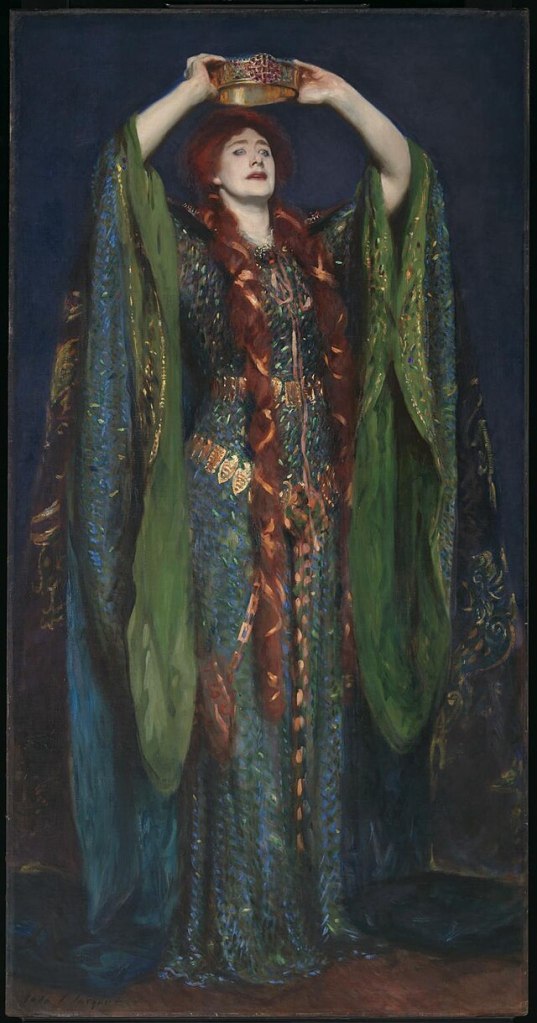
But why is that? A retelling, rather than a reimagining, needs to be relatively true to the original. Character names, settings, characterisations, events, general story trajectory. All of these things need to be distinctly like the source. A reimagining carries across elements of the original story, usually character names, settings, and parts of events, but does not suppose to be the the same story. Neither of these should be confused for an adaptation, which is exactly the same story in a different sense. Let’s have some examples, we’ll use Shakespeare: Romeo + Juliet, Baz Luhrmann’s 1996 film, is an adaptation – it is the actual play, moved to screen, and interpreted by the filmmaker. O, Tim Blake Nelson’s 2001 film, is a retelling. The ending is much the same, the character’s follow closely to original events, the characterisations even manage to remain fairly close to the source material. The setting is different, and things are modernised, but for the most part there is a noticeable 1-1 comparison. Back to R&J, Warm Bodies, Jonathan Levine’s 2013 film, is a reimagining. The ending is different, the situation changed, the characterisation different, but the base story, and the character names, bear some resemblance to the play.
Lady Macbeth is, at best, a reimagining. Some elements, like character names, stay the same. Lots of elements, like core plot points, ages, and even motivations vary drastically. This is an important thing to point out. Not because retelling and reimagining can’t be used interchangeably, indeed they are, and it is often hard to point out which is which without close reading, but because they imply different things. A reimagining asks for more grace. A retelling purports to shine new light on a familiar story. One is a new thing, the other is new angle on the familiar thing. Do you see the difference? In many ways one might argue that Lady Macbeth would have been more successful as an independent, un-yoked Gothic fantasy novel, that could draw on Macbeth, Bluebeard, and even DuMaurier’s Rebecca as an intertexts, but, in many ways, that is not a fair assessment. It exists, it is as it is.
For those that hated English growing up, or just didn’t hit a high enough level for words like ‘intertext’ to start taking on any meaning, an intertext is another work, typically of the same sort, but not always, from which an author, filmmaker, poet, or other creative might draw parallels and similarities. For example, an intertext of Gone Girl is Rebecca. This we can know quite surely, because Gillian Flynn, who wrote Gone Girl, gave an interview some years ago wherein she cited Daphne DuMaurier as an inspiration of hers, and stated that she had read several DuMaurier novels. We do not know, for absolute certain, that Rebecca was one of those books, but given that it’s a) DuMaurier’s best known work and b) bears narrative similarity to Gone Girl, we can assume it was. Now, it is worth stating here that an author does not need to assert that a work is an intertext, nor does a critic need to find proof that it may be. Intertext works in the grey areas of implication and assumption, but, more over, intertext works because it is holistic. All works are, to one degree or another, intertexts of other books. Tropes exist, clichés exist, certain stories, myths, and legends exist in perpetuity in the social consciousness of, if not the entire world, the majority of the Western world. Ideas exist, they are heard, they are written, and they are repeated. Even stories that subvert convention are, ultimately, intertextual – you cannot subvert a convention that does not exist. In order to do something new and different, you must first establish an old and common.
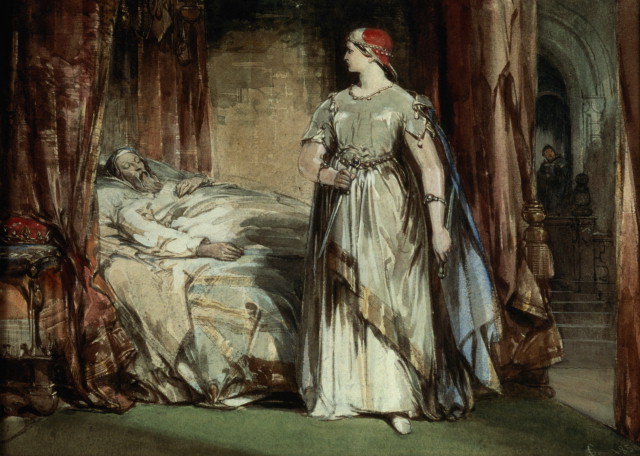
Returning, then, to Lady Macbeth a new question emerges: if everything is, to some degree, intertextual, then why am I even bothering to draw lines in the sand between retellings and reimaginings? Who cares? Well dear reader, quite obviously, I care. In English studies, as readers and writers, we have a limited scope of tools. Things we can use, comparisons we can draw. We are limited, specifically, by our own ideas, by our vocabularies, by what we can prove or argue, by what we have read. There are no wrong answers in English is not a correct statement, but it has the power to be a mostly correct one. If you can dream it, evidence it, and argue it… there are no wrong answers in English. There are, of course, wrong answers to specific questions. I, for example, once knew a girl who chose a poem about fatherly affection (Nettles by Vernon Scannell) in answer to a GCSE question about romantic love. That was a wrong answer. But for the most part we are limited only by our own understanding. When author’s move the goal posts then we are even more limited. Ava Reid did not write a retelling, but all the marketing keeps saying she did. This matters, not because what she wrote was not inspired by Macbeth, but because if we approach it as something that is Macbeth we are left with a very different impression. We are, as readers and reviewers, corralled into discussing something in an incorrect light. Did I not like this book? Or was I bound not to like it, because I was operating under false assumptions?
To be clear, I’m not sure if I liked this book or not. Part of me thinks not, for a lot of reasons, most of which are related to historical inaccuracy and the representation of Scottish peoples. What I am saying, is that if this had been labelled ‘reimagining’, or set in fictional universe, Lady Macbeth had potential. In the bones of that story is the kernel of something brilliant. As a retelling of the Scottish Play, set (presumably) in some historical version of Britain, it falls down. In a lot of places. The characterisation is totally off, not least because our main character is a 17 year old bastard noblewoman of Brittany, and not a 30+ year old Scottish woman. Not least because Shakespeare’s Macbeth, for all his murdering and violence, does seem to love his wife; whilst Reid’s Macbeth is transformed into a brutish, somewhat insane, rapist who sees her as a symbol. And not least because the ‘good man’ / love interest of this book is half-English bloke, who inherits a (thinly veiled) metaphor for evil and / or greed and / or badness from his Scottish father; a love interest who did not exist in Macbeth the play, who could not have existed in Macbeth the play as he did in this book on account of his supposed maternal grandfather having lived 100 years before Macbeth the play is set, and who had the boldest shark-jump story-line I have read in a long time. No spoilers, but trust me, you’ll know it when you read it.

Okay, so fine. Maybe the characters are different, have you not heard of authorial licence? I have. Okay so what, you’re upset about the setting? You gave O as an example of a retelling, and Othello is not set at a US High School, or about basketball players. True. Nor is Romeo & Juliet set in Miami! Also true. But… those settings serve their purpose, right? The high school setting of O doesn’t negatively impact the reading of the story, in fact, it works pretty well. A jealous colleague = the son of the coach, overlooked as MVP, a thing that modern young men could easily be jealous about. Even the re-framing of Desdemona and Othello’s relationship feels like a solid, modern YA equivalency – from Black military prodigy, looked down on as a choice for the Senator’s daughter, to Black sports star, looked down on as a choice for the Headmaster’s daughter. In Romeo + Juliet Miami is a fine choice; in an adaptation where daggers become pistols, it feels like a place where gang violence might be enacted. In fact, almost any major city would work on the same principal. But in Lady Macbeth, rather oddly, the setting of a rural Scottish castle… doesn’t really work.
What a stupid thing to say, huh?
Cause like… that’s kind of… where the bloody thing is set… right? Not really. I mean, yes, sure. On page. But the play Macbeth isn’t really set in Inverness, anymore than Blood Brothers is really set in Liverpool, or West Side Story is really set in New York. We can say that it is, we can write it down, but ultimately it is set directly in front of you. It is hosted in the space before you. Where the play is set, when it is a play, and not a book or even a film, is almost superfluous. It tells us, as readers of the play, what to think. It might even inform directorial choice, costumes, accents, and set design. But if you omitted that detail, 9 out of 10 times, the play could still be performed. Where the play is set is a malleable, insubstantial place. Where a play is set is a fictitious as the characters in it. Not to get too English-Studies-meets-Performance-Theory here, but we, the viewers, are as complicit in the making of a play as the actors. We are, all of us, involved in one great big con, an act of reciprocal deception. We agree to pretend that we are not watching people we know are actors, on a stage, in a building we know to be a theatre. And they pretend to be those characters. In the novel, quite suddenly, we are confronted with the unsuitability of an isolated castle as a setting for this tale. Not because it is not Gothic, and not because it is not Medieval, and not because it isn’t a reasonable place for them to live, but because it isolates Roscille, the eponymous Lady Macbeth, from everything else. In Shakespeare’s Macbeth, true or not, we get the sense of Lady Macbeth being in the middle of things. She is a puppeteer. She is a lynch-pin. An instigator. She’s right there, right in the heart of it all. In fact, only in moments of secrecy, like those with the witches, is there a sense of isolation. In Reid’s novel Roscille is left behind, she is removed from the actions of her husband, almost entirely. She is the tool in his hand, used sparingly. She is not unsexed, but re-sexed. Raped into womanhood, into wifedom, after a series of foiled plans. The setting is not fit for purpose, because it does not have the sense of being claustrophobic, of holding all the tension, and secrets, and lies of the story together. Instead it feels oddly open. Stone walls, through which one can hear the sea. A castle with windows, and walkways, and grounds on the zenith of a cliff, from which you can see miles into the distance. Reid’s Glammis is not a place for secrets, and Lady Macbeth fails to keep many of them.
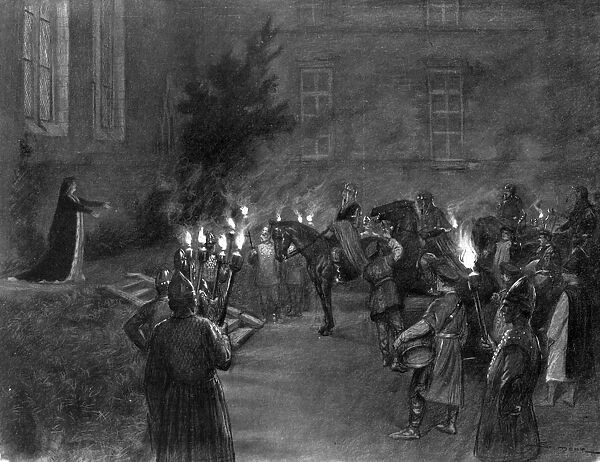
Would this be less of an issue if this was a reimagining instead? Not sure. Can’t say. Who knows? But I tell you what, I might be less filled with the desire to poke holes and draw comparisons! In a reimagining , when I am expecting changes to be apparent, I might be more accepting of an unsuitable location. If nothing else, I think this particular ramble has made apparent the issues of carrying across details from one form to another without sitting down with the intentions of those details. Few notable literary figures are as ripe for a ‘Death of the Author’ reading as Shakespeare. If we consider, not the man or his politics, but the work, readings can often be hugely different. I would argue, however, that when translating stories from stage to page, one might be left with no choice but to interrogate authorial intention, to ask oneself not ‘why Scotland?’ but ‘how does this setting help the story, what does this setting do to support the narrative and its themes?’ And I’m really not sure Reid sat down with those intentions. I think she, quite sensibly in many ways, thought, ‘Yes, Scottish castle. Check.’
I think what I’m gearing towards here, what I imagine anyone who has got this far through my inane mind dump has known since paragraph 2 or 3, is that (more than the setting, or the characterisations) what I found to be ‘not fit for purpose’ was Lady Macbeth herself.
I’ve never written something like this before, outside of university close reading, where I simply spoke on one work. Pulled it apart and looked at the pieces, but this book has inspired that desire in me. I’m not sure yet if that’s a good thing or not, I’m starting to feel a bit mean, but we’ve got this far, right?
So… Roscille Macbeth. First things first, she’s not Scottish. Now, arguably, she doesn’t have to be. Technically speaking the Scottish Lady Macbeth was Gruoch, who (SPOILER) does feature in Lady Macbeth as a previous wife. But also… she absolutely should be Scottish. I mean, surely? Gruoch, the Lady Macbeth of myth and Shakespeare, is not here. In this game of Regicide Cluedo, Roscille is our Miss Scarlet, in the bedroom, with the dagger. Our at least, in the bedroom, with the means to get a dagger driven through Duncan’s throat. Which means, in this version, she is the Lady Macbeth of Shakespeare, if not the Lady Macbeth of myth. Part of me kept waiting for Macbeth to become a love interest, for the intense folie à deux, the give and take, the psychosexual power struggle that sexes and unsexes both members of the couple, forcing them in and out of their gender stereotypes, pushing and pulling them into roles like husband, wife, murder, accomplice, liar, king, or lunatic. And it wasn’t there. Roscille wasn’t just a poor understudy to Gruoch, she was like a child imitating actions she did not fully understand. There was an immaturity to her scheming, and immaturity to her relationship with Macbeth, that bars the way for this ever to become a retelling. And then, in something we had been building towards for the whole novel, in a sick, deeply feminine suspense, that pulled at me in a horror-movie way… Roscille became a victim of sexual violence. Now, to be abundantly clear, her experiencing sexual violence in no way makes her a worse character, nor does its inclusion feature in the litany of historical inaccuracies I have, several times, defamed. But it does, as so many other aspects of this story do, make her a worse Lady Macbeth.
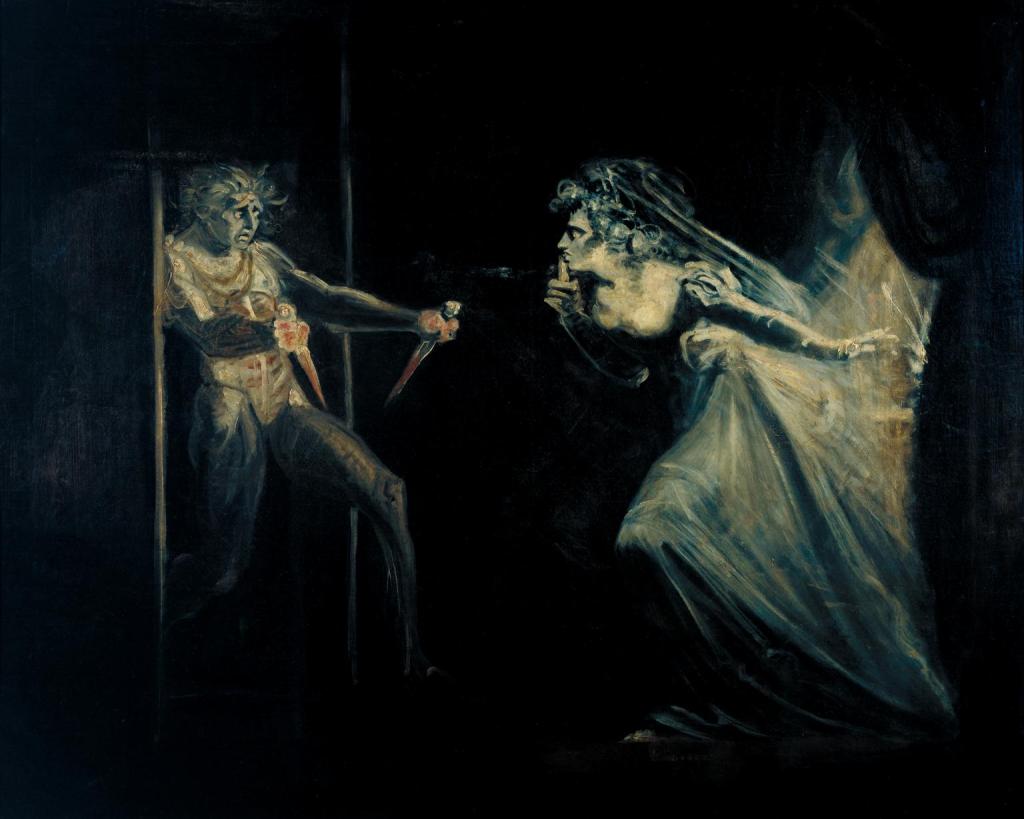
Why though? I want to say here it isn’t anything to do with purity, or strength, or blame, or victim-hood, or womanhood, or sex-appeal, or any other social or political metaphors people draw between female characters and sexual violence. It’s about love, and it’s about power.
In Macbeth, the play, you believe that Macbeth and Lady Macbeth love each other. Not perhaps, that they are in enamoured, joyous, puppy-love, filled with affection and sweet nothings. They are in love with each other in the way that the couples of King Lear are in love with each other. It is a mature, bloody, angry love. It is a love that weathers the storm of child-loss, a love that lasts even when both parties are in agony, even when both are driven to the brink of madness in pursuit of greater power, having so recently been powerless in the face of cruel, babe-killing fate. It is a love of almost equals. In my Master’s dissertation I spent a lot of time on the idea of psychosexual power, how we hold it, how women, specifically, gain and employ it. How women having psychosexual power castrates the men in their lives, forcing them into the feminine role, and how they can gain psychosexual power through motherhood. This is all very English Studies-y stuff, where I am talking never about actuality, and always about metaphoric. Time for another example, this time in a nutshell; Nick Dunne (Gone Girl) is metaphorically castrated by his wife and forced into the role of wife-husband mother-father when she a) inseminates herself and b) uses her role as mother to his child to exert power over him, and prevent him from overthrowing her. Thus Amy establishes a psychosexual relationship not unlike that of the stereotypical patriarch over the stereotypical submissive wife / mother.
That probably means nothing to most of you, but my point is in Macbeth, the play, Lady Macbeth uses her secrets, the knowledge that she has, to manipulate her husband. She can only do that through love, through the trust that exists between them as married people, and the understanding she has of him. She can also use the joint, equalising, grief that they both feel to bring them to a place of equality. In that place, as two married people, as two grieving people, they are psychosexual equals. Sex and gender irrelevant. He takes on, from their place of equality, the role of killer [male], thus leaving her in the role of wife & accomplice [female]. How do we sex these? Easy. Knife = phallic symbol. Then Macbeth bitches out, forcing Lady Macbeth to pick up the knife becoming killer [male] and leaving him to fill the other role [female]. After that point Macbeth resumes his male role, as King he is inalienably male, and forces Lady Macbeth back into her feminine role, where she begins to deteriorate. She has tasted the power she so desperately craves, and stripped powerless again she is left with nothing but a much resented womanhood – a womanhood that has brought her only pain.
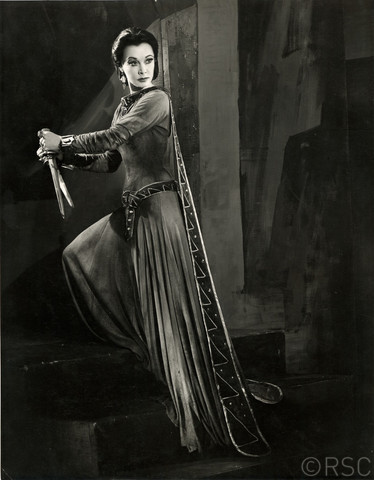
In Lady Macbeth, novel, this scene has less psychosexual potency for a few reasons 1) it is Macbeth’s idea to kill Duncan 2)Macbeth gives Roscille an order, and does not attempt to kill Duncan himself 3) she actually gets the guards to do it, and does not just frame them 4) without the loss of a child, or indeed a true marriage, to equalise them, they embody gender stereotypical psychosexual roles. This is the first hint of what is confirmed by the rape of Roscille by Macbeth – there is not love, no equality, between them. The secrets they share are shared because Roscille is unequal, and thus poses no threat to her husband, and because they do not love each together, and thus she had no emotional control over him either. Roscille does not at any time shake off the chains of her stereotypical womanhood, she does not, at any time, successfully reverse her psychosexual role with that of her husband. Even her attempts at it with the weaker Fleance fail, and she is punished for that by an (arguably) metaphorical rape, prior even to the actual assault committed by her husband. Macbeth keeps her in that role by raping her continuously from then on. Nightly, as he attempts to impregnate her. Only in the brief seizing of her own sexual destiny, her choice to have sex with the English Prince Lisander, counters this reading. And even then, there is such a nexus of conflicting metaphors in that scene (an acceptance of her otherness, yet his otherness stems from Scottish-ness, yet Scottish-ness is associated with belonging for all others, I could go on) that one has to wonder if Reid was even fully aware of all of the layers of idea and inference she has crafted, or simply left, in this book.
What we’re left with, then, is a confused and confusing woman. A woman we are to believe is smart and crafty, whose plotting never comes off. A woman resentful of her station, her role as sexual play-thing, and as brood mare, who nonetheless does little to prevent that fate, neither claiming it, nor truly rejecting it. Roscille does not have to be a hard woman, she does not have to be an aggressive woman, she does not have to reject her femininity, nor rail against her station outwardly, but bloody hell, she could do a little more than moan about it in her head! I just struggle to see how this book could be read as a feminist work, or even a depiction of female rage. This, to me, was like a love letter to female impotence. A laundry list of bad things that happen to women, presented by a woman who does not actually fail, necessarily, at freeing herself, but does fail spectacularly at enacting any actual change, beyond killing the bad men right in front of her. A woman who spends more time bemoaning the state of her life, and the supposed fate of other women, (not to mention falling into insta-love with a man she just met,) than she does doing anything about it. She is just… weak. And not weak in a profound, sensible, realistic way. Not weak in an honest, raw, full way. She is weak, in a weak way! She is weak in a no-effort, floppy, frustrating way. She is the character equivalent of weak tea, which is not weak because of production of the bag, or coldness of the water, but simply because the brewer couldn’t find it in them to brew her stronger. And that is why she is not fit for purpose. Say what you want about Gruoch, about the Lady Macbeth of myth and Shakespeare, but she is not weak. She is ruthless, and maybe mad, and undoubtedly suffers under some gendered expectations, but she is fiercely herself, furiously a woman, and firmly under her own power.
I want to conclude this really well, but honestly, if I tried I’d only hit on something else, and then you’d be stuck with me for another paragraph. So instead I will say this: you have every right to love this book. I hope you do, it would be a shame to read something and not like it. But if you don’t, if, like me, you have a lot to say about it, I would encourage you to share those thoughts. I’d like to read them.
- Ellen Terry as Lady Macbeth, John Singer Sargent, 1889 ↩︎
- Lady Macbeth, George Cattermole, 1850. ↩︎
- Taken from The Plays of William Shakespeare, Edited and Annotated by Charles and Mary Cowden Clarke, Illustrated by H. C. Selous. With Thirty-five Full Page Wood Engravings after Frank Dicksee, RA., H. M. Paget, A. Hopkins, R. W.S., and others, and Thirty-five Photogravure Plates. Special Edition Part XXVI-XXVII. ↩︎
- Lady Macbeth welcomes King Duncan at the gates of Macbeths castle, J. Simont, 1909 ↩︎
- Lady Macbeth Seizing the Daggers, Henry Fuseli, exhibited 1812 ↩︎
- Macbeth, 1955: Lady Macbeth grasps the bloodied daggers Photo by Angus McBean (c) RSC Reference ID : 131185 ↩︎
 Let's Talk Books
Leave a comment