
Spoilers for Gone Girl (2012 / 2014), Ready or Not (2019), and Knives Out (2019) ahead. Please see footnotes for disclaimer. 1
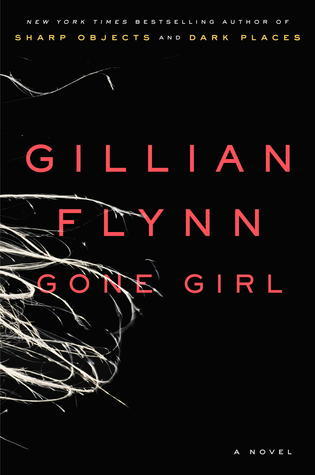
When Gillian Flynn penned the ‘Cool Girl’ monologue, first in her novel Gone Girl, and then later for the screen adaptation, she provided catharsis for women everywhere. Cool Girl; the state of being one’s best self, as defined by the gaze of the men you’re involved with. Flynn also, although I doubt this was her intention, engaged directly with complex literary criticism, giving voice to the self-conscious character construction of contemporary authors.
Now would be a good time, I think, before I get all theoretical and academic, to tell you that I have an MA in English Studies. English Studies covers texts, critical ideas, and the wider picture of literary development. Specifically, the way that theory, society, and literary output shape each other; the development of the written form into what it is, and into what it was. The higher the level you work at the broader your considerations need to be, so that, in turn, you can be narrower. The more you know, the easier it is to apply very specific ideas to smaller, more precise areas of interest.
Let’s get back to Cool Girl. In Flynn’s novel, which I will admit I have studied at length (it was one of my MA thesis texts), she illustrates the constructed elements of persona. Specifically, she highlights how women strive towards Cool Girl, how Cool Girl is, ultimately, a performance put on for the benefit of men. She engages with ideas of gender performativity, of performance studies as a wider discipline, and of the ideal woman as an archetype. Amy Dunne, the character who delivers the monologue – both in the novel as an introspective passage, and in the film – casts herself as the Angel in the House, but is quick to subvert the traditional sense of the phrase.2 Whilst Amy engages in behaviour that her husband, and indeed she implies the modern man, would deem ideal, she makes it clear that the ideal feminine must now include sexuality, and the illusion autonomy. In order to achieve her husband’s ideal feminine archetype she must convince Nick that she enjoys doing, and being, all that he desires. But Amy isn’t just talking about herself, when she looks at the women around her she is able to point out what Cool Girl looks like in their relationships:
Cool girl is hot. Cool girl is game. Cool girl is fun. Cool girl never gets angry at her man. She only smiles in a chagrined, loving manner. And then presents her mouth for fucking. She likes what he likes, so evidently he’s a vinyl hipster who loves fetish Manga. If he likes girls gone wild, she’s a mall babe who talks football and endures buffalo wings at Hooters.3
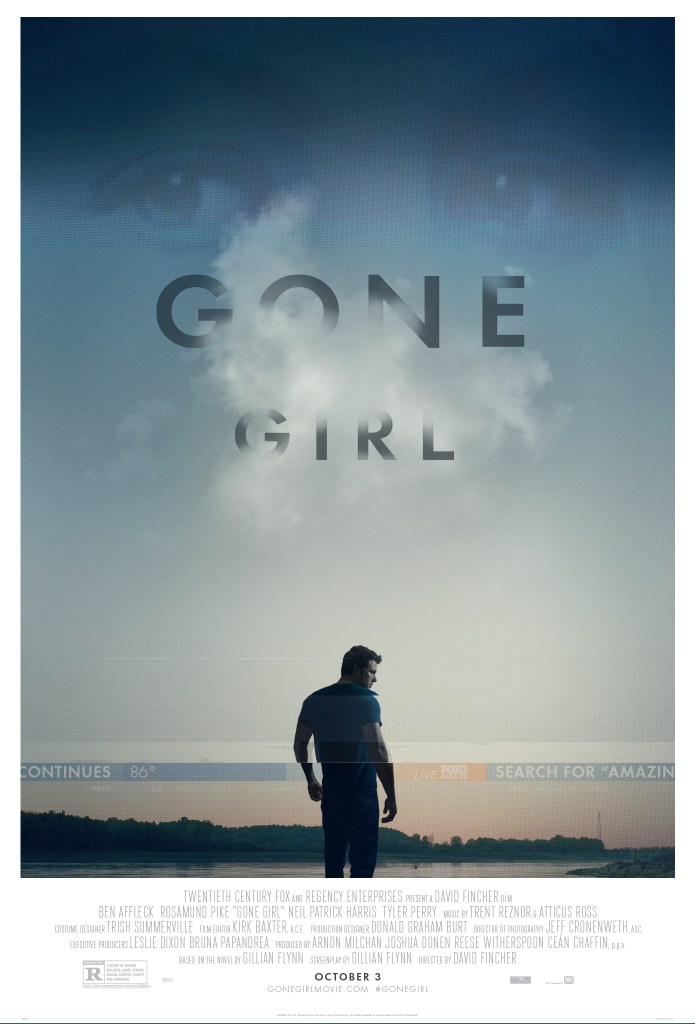
As Amy makes clear, Cool Girl becomes – to the modern woman – what Angel in the House was to the Victorian; it is the archetype you must seek to replicate in order to be deemed most attractive.
Okay, so now we have the some of the theory out of the way. Why, pray tell, am I telling you any of this? And, more importantly, what could it possibly have to do with female main characters? Stay with me, I promise this post isn’t just me waxing lyrical about Gillian Flynn’s 2012 bestseller. We (in this instance those who write) want our main characters to be cool. Of course we do, we want people to like them. In fact, we want our MC’s to be cool so badly, that when they aren’t, if they’re nerdy, or odd, or cruel, then that becomes part of the narrative in a very real way. It isn’t just highlighted, it is the point, it becomes the USP of the novel. The contemporary author’s self-conscious construction of cool reveals two things:
- No one can escape cool, not even the fictional. Societies ideals are so pervasive, so ingrained, that even in worlds we manufacture they must be obeyed.
- We are all, to some extent, aware of the inherent performativity of persona.
I sense I’ve lost you. What I’m getting at here, in a very round about, literary theory way, is that we construct our main characters. Of course we do. They were in our heads, and now they’re not, now they’re out here doing things. But in that construction we betray our own subconscious understanding of the world, and the ingrained rules of the societies we live in. More than that, we illustrate our awareness of the reader, and of the reader’s expectations. Just as the Angel is constructed for the man, our MC’s are constructed for our readers. In Death of the Author Roland Barthes puts forward that the truest way to read literature is in a vacuum, that essentially the author should ‘die’; that is, that the author’s desires, their inferences, their intentions, should not be brought to bear on the writing itself. Barthes suggests that only through that metaphorical ‘death’ of the God-like author, whose motives we (here meaning the reader) may never truly know, can the writing be understood absolutely for what it is. What I’m saying is that we exist in a time where writing to your target audience is the best way to ensure long term success. Once upon a time writing was a much different kind of career, first there were poets, and then came novelists, writing things we would now consider canonical. Then, eventually, came the popular authors, who we now define by their difference to their modern counterparts. After all, are we not perpetually looking for the next Agatha Christie? Or the next F. Scott Fitzgerald? Times have changed, books and authorship have become commercialised, the industry is dominated by publishing giants, and the market saturated with options. In fact, rather than the reader killing off the author, the only way for writing to achieve anything like literary purity these days, is for the author to kill off the reader.

Here we get to the crux of it, and the reason this post purports to be about female leads specifically. I’ve covered Angel in the House, Cool Girl (the Angel’s modern counterpart), even Death of the Author, now it’s time for a brief sojourn into feminism. When it comes to the looks, behaviour, career choices, and even family planning women bear the brunt of societal ideals. Now, and this is key, I’m not suggesting that men, or indeed gender queer individuals, aren’t subject to their own pressures. I’m simply not talking about them right now. What I am talking about is the acceptable woman. Even in new and emerging genres we see an adherence to societal norms, to social mores, to acceptability.
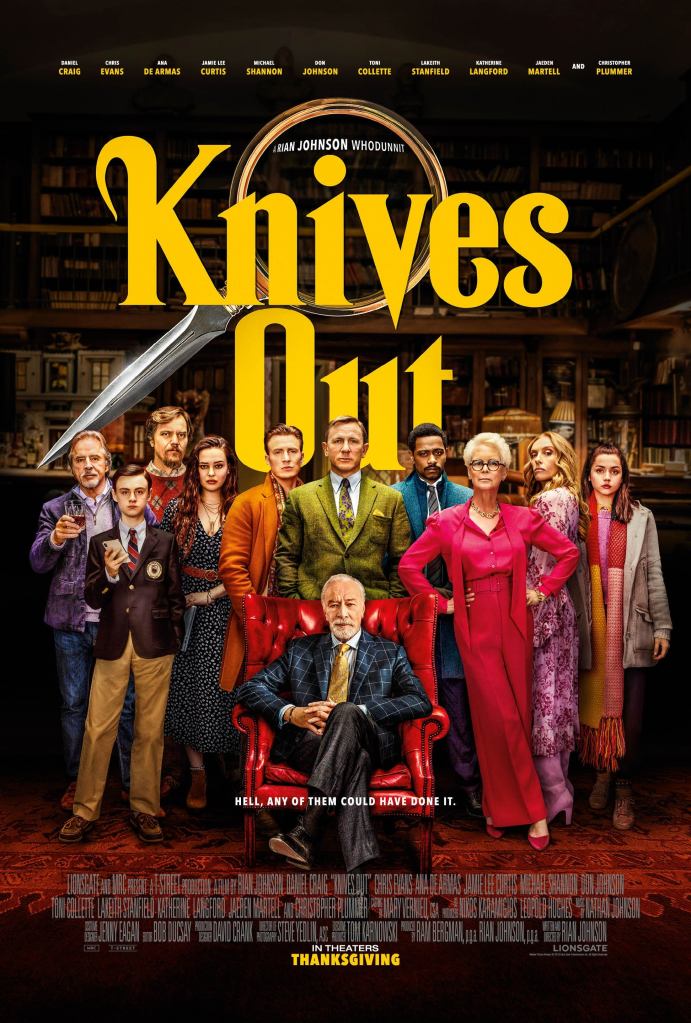
Let’s use the Good for Her film as an example. The women of these films, in another time, or in another genre, would be your ‘Final Girls.’ What sets them apart is that they don’t only survive, they are rewarded. Everything is coming up roses for Amy Dunne, Grace Le Domas (Ready or Not), and Marta Cabrera (Knives Out). Yet, whilst these women fight against certain feminine stereotypes – refusing meekness, taking agency, and committing horrific acts to safeguard their own well-being – they still adhere to traditional aspects of feminine acceptability. They’re beautiful, even Amy Dunne, who attempts to leave behind her own attractiveness, is forced to embrace it again; they’re inherently feminine, seen best in Marta who saves others at the expense of her freedom, presenting an intrinsic need to care for others; they hold traditional roles, Grace in particular endures her entire ordeal in a tulle-skirted wedding dress; and, worst of all, they’re cool. Amy is gritty and foulmouthed, cruelly intelligent, and has a masculine ruthlessness; Grace is fun, she switches out her heels for Converse, she quite literally plays his games; Marta is deceptively fashion forward, smart, and unwilling to be intimated. They might not be the Cool Girls the men in their fictions want, not by the end of the narrative at least, but each and every one of these characters is the Cool Girl the audience wants. In much the same way, author’s frequently fall into the trap of making our female characters the Cool Girl our readers want. At the very least, I think those writing into the commercialised popular fiction space have to contend with the desires of their readers in a very real ‘career defining’ way. One has to wonder if Charles Dickens ever tweeted about having to choose between writing what they want, and writing what they’ve been told will sell best.4
I want to be clear here, I might have set this all out in theory, but in practice I, like anyone hoping for eventual commercial success (and the accolades that come along with that), am writing to my target audience. No one is picking up a New Adult fantasy/adventure/romance novel without a pretty kick-ass cast of characters. That being said, I am not writing a ‘Cool Girl’ in much the same way that I am not writing an Angel in the House. Elva, my FMC, is as much a person as anyone else. When I asked a friend, one who sits comfortably within the parameters of my target market (early-mid 20s, female, fantasy reader), to read my manuscript one of the first things she said to me after was that the characters ‘feel real.’ I can’t tell you how happy I was to hear that. The thing about real people is that they react, they make choices, they do things that are silly, or dirty, or weird. They’re awkward, they stumble. Real people are not ideal. When so much of the media we consume, including that which purports to be subversive, still conforms to the outdated and idealised notions of femininity you can choose to build your characters outside of that. They can be cool, but they don’t need to be Cool Girl.
If you’ve made it this far you deserve a really strong conclusion. I don’t have one. That’s real. What I do have is this; a suggestion. The next time you sit down to plan someone or something out, take a moment. The next time you write out a sass-filled exchange, rife with witty repartee, take a moment. And in that moment ask yourself, is this cool? Or this Cool Girl? Let yourself be critical, properly, academically critical, even if it’s just for a few seconds. Give yourself permission, every now and again, as the situation asks for it, to write not what your reader expects, but what you know to be real.
- Disclaimer: I do not own the copyright for any of the quotes or images used in this post. This post is for the purpose of commentary, and as such I am acting within the parameters of Fair Dealing, as set out in UK law. All quotes and images are the copyright of their respective creators, publishers, distributors, authors, and artists. ↩︎
- For those who don’t know, the Angel in the House is a feminine archetype, usually used in conjunction with the Fallen Woman. Based on ideas of Victorian ideal femininity, the Angel is pious, meek, submissive, does not have sexual thoughts or desires, and is engaged in ideal stereotypical behaviour (she is a wife / mother.) In literary criticism it is common to see the Angel contrasted with a Fallen Woman; in return for her ‘good’ behaviour the Angel is rewarded, where the Fallen Woman, who is ‘bad’ (most typically meaning sexually active,) is punished. Although based on Victorian ideas, the Angel in the House archetype can still be found in contemporary writing. ↩︎
- This quote is taken from the 2014 film version of Gone Girl, directed by David Fincher, and written by Gillian Flynn. Gillian Flynn is the copyright holder for the novelised version of this monologue. This quote is taken from the transcript of the monologue on IMDB. ↩︎
- For those looking for an example of this, see Maggie Steifvater’s tweets from approx. 2019/20. ↩︎
 Let's Talk Books
Leave a comment