
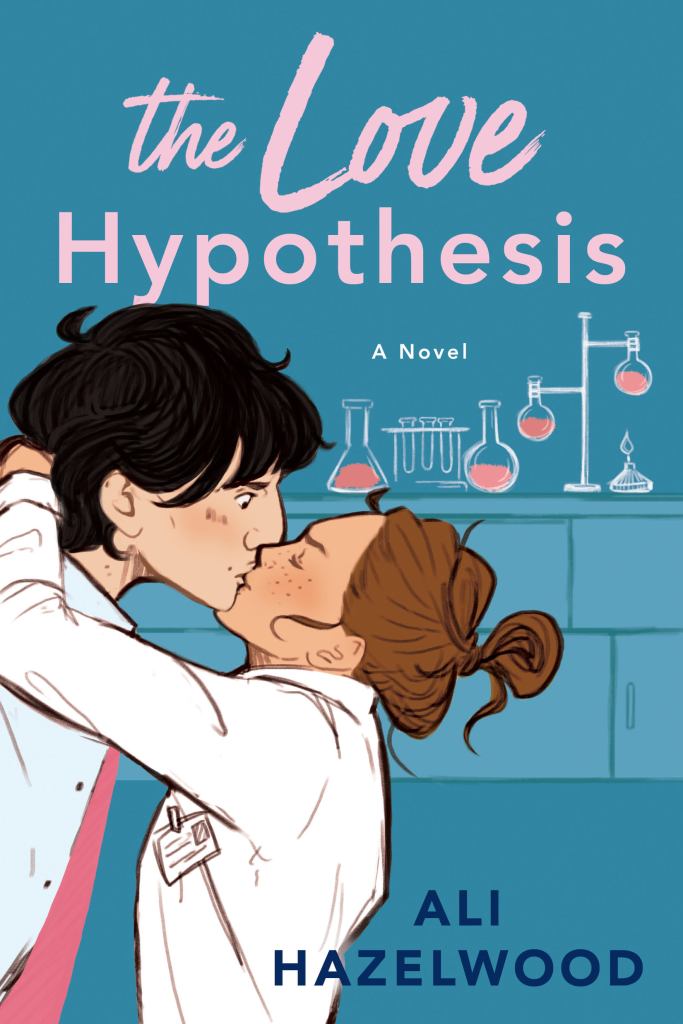
Ali Hazelwood’s STEMinist series is perhaps one of the most successful mainstream romance series of recent memory. Starting with The Love Hypothesis, a novel famously based on Reylo fan-fiction, the series has faced criticism for the similarity between plotlines, the appearance of characters, and even character development. Whilst much of that is true, the series also has an undeniable appeal. Reliably heading towards a happy ending – and open to exploring all manner of romantic and personal trials – Hazelwood has crafted a series that draws in regular romance readers, and newbies alike.
Book one in this series is The Love Hypothesis, which took the internet by storm. A TikTok sensation, turned international bestseller, Hazelwood’s first full STEMinst novel was a fun, fiesty, science-filled romp. A classic grumpy / sunshine romcom, the novel follows Olive, a young postgraduate student, as she enters into a fake-dating situation with Stanford professor Adam. High energy, and fast-paced, some might find this hard to read in places; Olive is every inch the young millennial, and her humour sits very much within that generation. The duo also get themselves into all sorts of awkward situations, as they desperately try to pass of their relationship as real, proving to others, and to themselves, that they are the real deal. Of all the books in the series this has perhaps the least complex emotional landscape. Olive’s motivation is proving to her best friend (Ahn) that she is totally over her ex, alleviating Ahn’s guilt around dating said ex. Adam is motivated by a desire to safeguard his job, with whispers of him being poached he needs the higher-ups to believe he has more skin in the game than his own desire to stay. Thus their fake relationship serves both aims. Hazelwood isn’t merely a romance author though, whilst that is absolutely the dominant genre, she makes valiant efforts to introduce sub-plots around academic validation and gender discrimination. This first book is good, it is by no means her best, but it is an excellent introduction to the series.
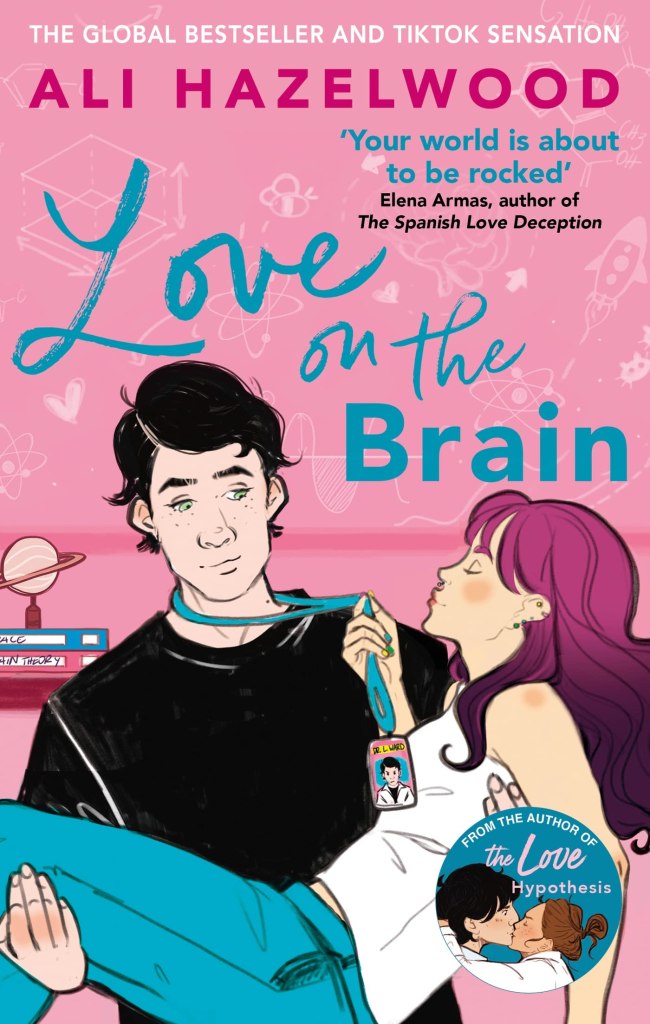
Book two of this series is Love on the Brain. Ostensibly very different, following neuroscientist Bee as she starts a new position working aside grad-school rival Levi, Love on the Brain took the most heat on the similarity front. Reviewers were quick to point out Hazelwood’s repetition; Bee, like Olive, is sunshine to the MMC’s grumpy; like Olive she is small, where both Levi and Adam are large; and like Olive she has close, and important, relationships with female friends. Of course, that could be a description of almost any romantic comedy. Hazelwood might be ‘repetitive’ or she might just be writing to genre. I really enjoyed Love on the Brain, the science in this one was given a little more space to shine, and whilst the subplot devolved into a wild last-minute plot twist, I enjoyed the set up. Unlike it’s precursor, book 2 in the series has a more complex emotional landscape. Levi and Bee don’t know where they stand with each other for much of the narrative. Whilst Levi is still reeling from loss, Bee is trying to overcome both a horrific betrayal, and the accompanying horrendous break-up. Stuck in close proximity due to their work, the two learn and grow together. This is, of the three out so far in this series, the only one where the main characters on anything approaching level-pegging. Whilst Levi technically has more seniority, they are both fully qualified, experienced, and respected professionals. This is also, of the three, the novel with the most fully realised happy ending. Although it does bear unavoidable similarity to the first, the second novel is no less enjoyable.

The third and final book in the series (as it stands) is Love Theoretically. Focused on Elsie and Jack, a pair whose lives are entwined in more ways than they first realise, this is the most emotionally complex, and academically focused book of the 3. Elsie is desperate to move on from her current dead-end role, but when opportunity comes knocking she finds herself face-to-face with the brother of a close friend. Unfortunately, for both of them, neither is who the other thinks. Despite that, and with Elsie unable to explain her relationship with his brother, the two grow ever closer. Evolving from barely-acquainted to firm-friends, Love Theoretically is also a story about personal and professional growth. Elsie needs to find her feet in the cut-throat world of academia, and learn how to think for herself, whilst Jack must come to terms with the harm his anger has caused. Many would say this is their favourite of the three, and I have to agree. Of all of the books in this series this is probably the one I would feel most confident recommending to a friend. That being said, this is without a doubt the most sexually explicit book in the series. Whilst each book becomes increasingly detailed, with a greater proportion of the text devoted to physical intimacy, Love Theoretically takes it up another notch. For seasoned romance readers Love Theoretically likely won’t raise an eyebrow, but reader beware; this is not the one to lend Grandma.
As romance series go, few are as distinctive, and yet differentiated as this one. Unlike other series in the genre, what holds these books together is a shared basis in science and academia. There are no brothers, no band-mates, no members of a sports team. Each novel takes us to a new location, a new area of science, a new set of love interests. Hazelwood had cemented herself as a real player in contemporary romance, and with her first YA novel released in 2023, and her first paranormal romance scheduled for 2024, fans can only speculate on how high her star will soar. I would recommend this series to anyone in need of a break, anyone who enjoys romance subplots, but isn’t sure romance is for them, and anyone looking for a new favourite romance author.
 Let's Talk Books
Leave a comment